Determining the True Bathroom Renovation Cost in Australia for 2026
You’ve likely seen the glossy $15,000 reveals on reality TV, but in the Australian market of 2026, those figures tell only half the story. To plan a project that doesn’t stall halfway through, you must look past the showroom aesthetics and face the financial reality of modern construction.
Determining the bathroom renovation cost Australia faces in 2026 reveals a significant shift from historical norms. Data from the Housing Industry Association (HIA) suggests a steady 25% rise in labour and material expenses over recent years, meaning budgets that were sufficient in 2023 often fall short today.
The primary driver of this sticker shock is often referred to as the “Hidden 60%.” While it is tempting to focus on visible “jewelry” like taps and tiles, the majority of your spend actually secures the invisible “envelope”—the waterproofing, plumbing, and electrical compliance that protects your home from structural damage and costly shower leaks.
Navigating this new economic landscape requires a shift in strategy rather than just deeper pockets. This guide breaks down the real 2026 benchmarks to help you allocate funds where they matter most, ensuring a durable, highly personalised result without unexpected debt.
Why Your 2025 Budget Won’t Work in 2026: The New Economic Reality
Since 2023, the market has witnessed a cumulative 25% increase in overall renovation costs, rendering budgets planned just a few years ago obsolete. While rising material prices often grab headlines, the dominant expense remains skilled labour. You aren’t just paying for a plumber’s time; you are funding their insurance, licensing, and adherence to strict local building codes that ensure your home remains insurable.
Material selection is the one variable you can control, specifically the gap between “builder-grade” and premium options. Builder-grade fixtures are mass-produced units offering reliability without the high price tag. Conversely, premium materials—like custom timber vanities or imported ceramics—are still subject to volatile supply chains. Choosing bespoke finishes increases your exposure to shipping delays, which can inadvertently spike your labour bill if tradespeople are left waiting on site for parts to arrive.
To build a realistic roadmap, you must account for the specific pressures inflating the current bathroom upgrade cost. The primary 2026 price drivers include:
- Persistent inflation in specialist trades: High demand for licensed waterproofers and electricians.
- 2026 building material price trends: Continued volatility in imported ceramics and joinery.
- New compliance requirements: Updated standards that impact behind-the-wall infrastructure.
The Three-Tier Pricing Model: From Budget Refresh to Designer Sanctuary
With the economic landscape defined, expenses typically break down across three standard budget tiers. Understanding these brackets helps you manage your overall bathroom renovation cost Australia-wide.
Targeting the $15,000 to $25,000 Range: Cosmetic Refresh
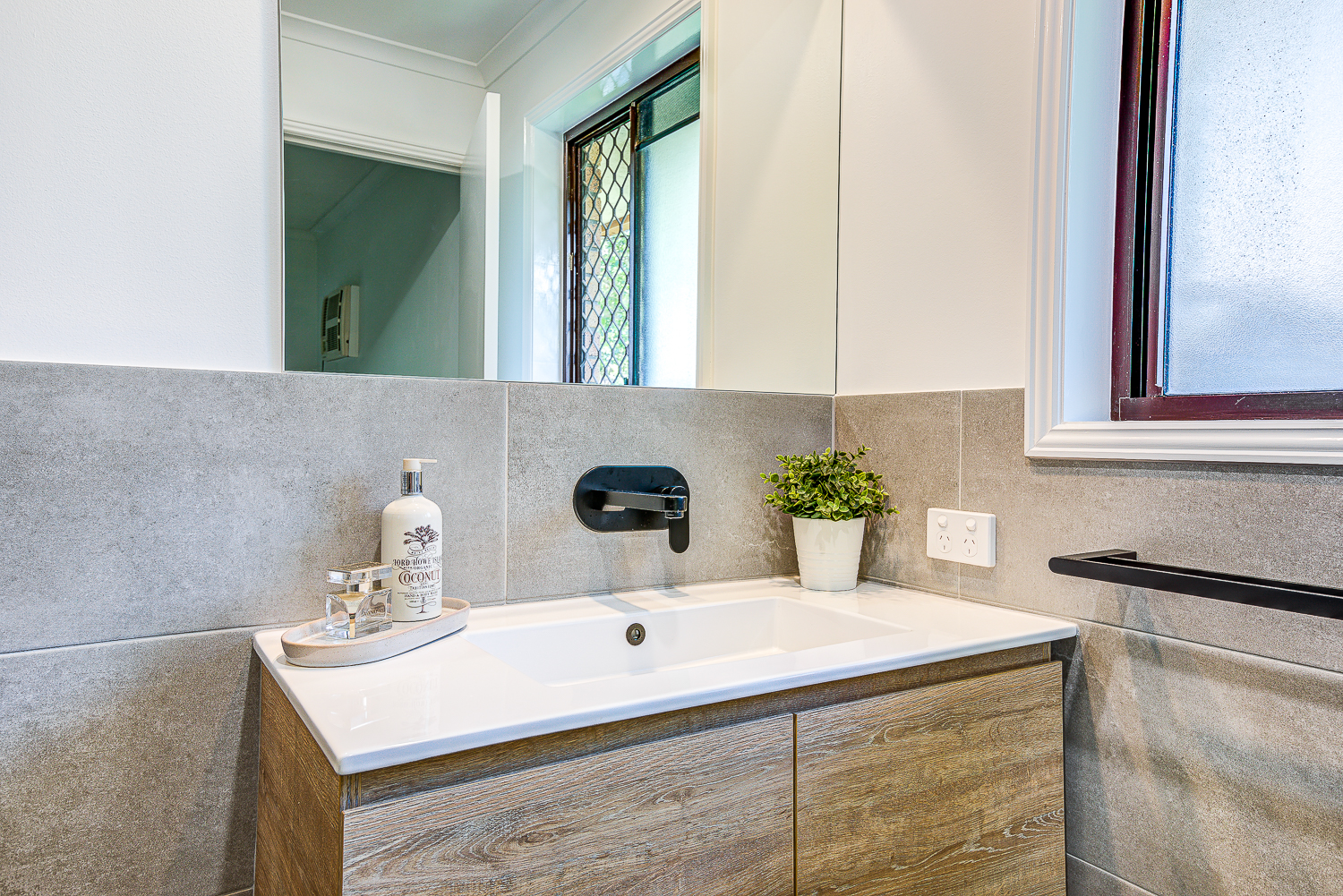
Targeting a spend between $15,000 and $25,000 places you in the “Cosmetic Refresh” tier. In the 2026 market, a budget bathroom renovation generally necessitates keeping the layout exactly where it is to avoid costly plumbing relocation. Your budget here is prioritised for resurfacing existing tiles, installing a pre-made vanity from a big-box retailer, and choosing the perfect colour scheme for your bathroom with new paint and tapware. This approach gives the room a facelift without touching the expensive “behind-the-wall” infrastructure or altering the drainage points.
The $25,000 to $45,000 Bracket: Standard Family Renovation
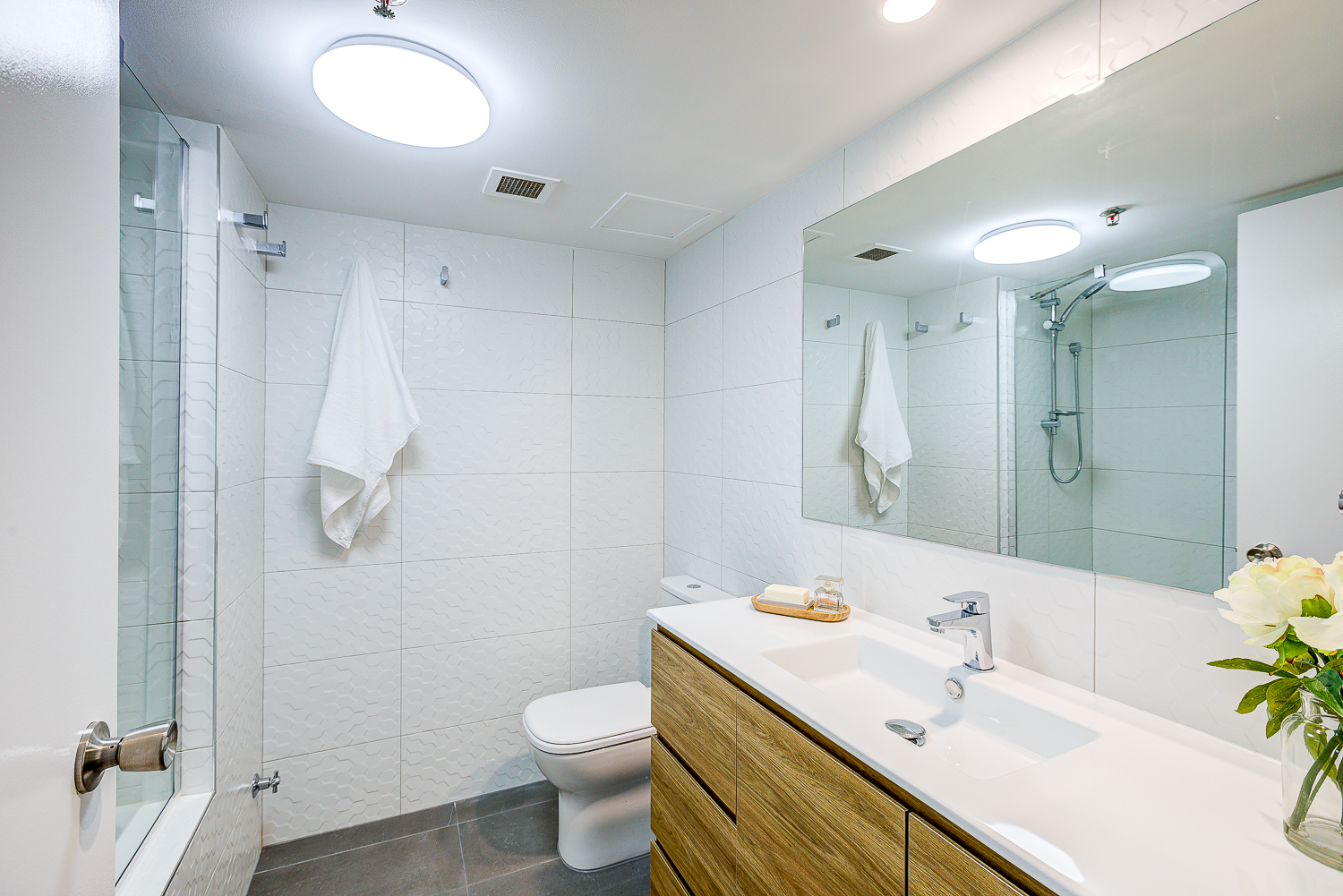
Stepping up to the $25,000 to $45,000 bracket unlocks the “Standard Family Renovation.” This is currently the most common investment level for Australian households, allowing for a complete strip-out of the old room rather than just a cover-up. At this level, you can afford compliant waterproofing systems (a critical insurance requirement), durable porcelain tiles, and a semi-frameless shower screen. You gain the flexibility to make minor layout tweaks—like shifting a vanity a few centimetres or upgrading to a back-to-wall toilet—but major structural changes usually remain out of reach.
Exceeding $45,000: Structural & Luxury
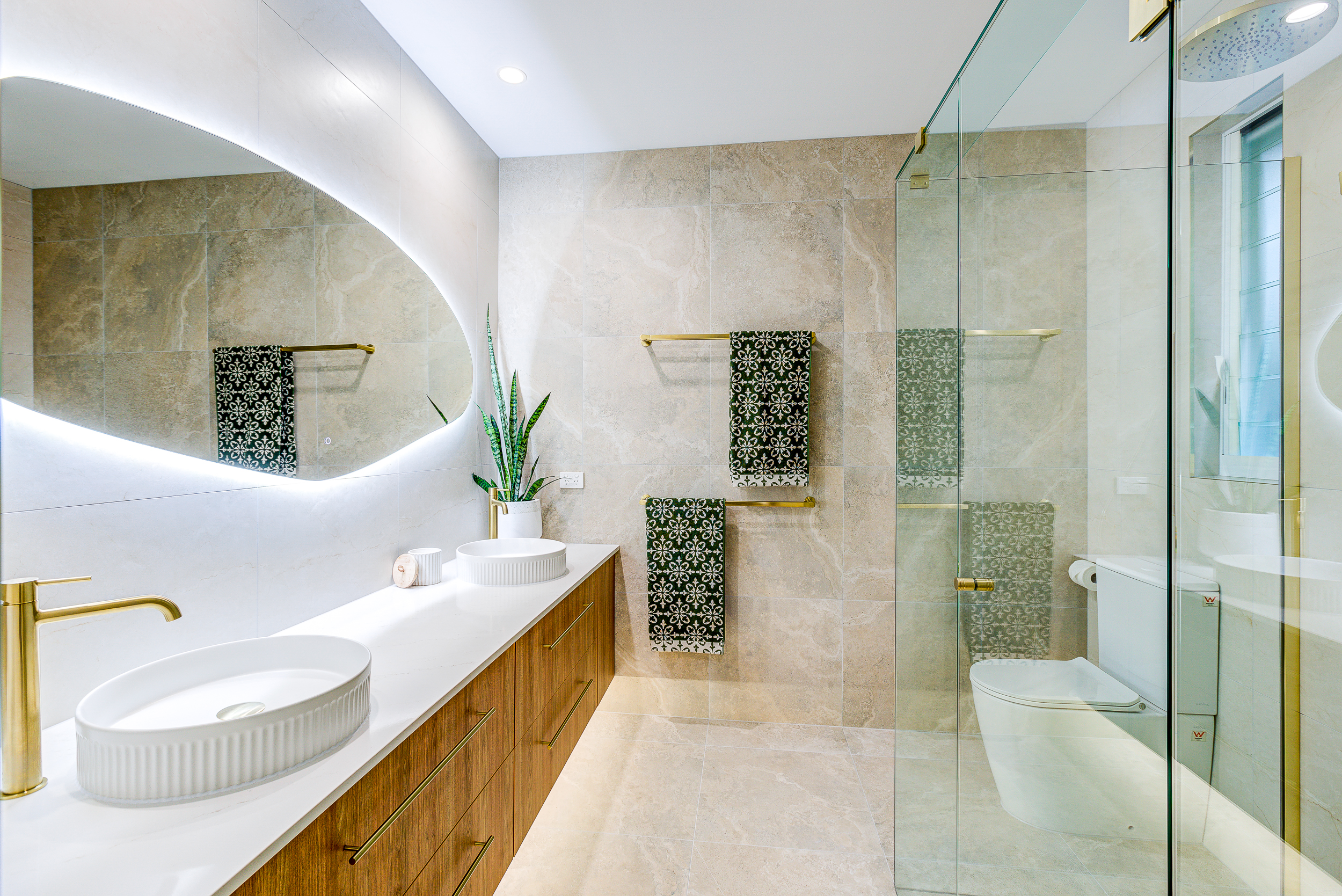
When your investment exceeds $45,000, you enter the “Structural & Luxury” category. This financial tier allows you to move the toilet or shower to an entirely new wall, which involves significant concrete scanning, coring, and plumbing rough-ins. You trade mass-produced fixtures for custom joinery, natural stone benchtops, and luxury additions like underfloor heating. Understanding the gap between budget vs luxury bathroom renovation costs is crucial; the extra spend here isn’t just for prettier tiles, but for the complex, skilled labour required to alter the room’s physical footprint.
The 50/50 Split: Understanding Where Your Money Goes Between Labour and Materials
Walk into a showroom, and it is easy to calculate the sticker price of a vanity, mixer tap, and tile box. However, these visible goods—known in the industry as “PC Items” (Prime Cost)—generally represent only 40% to 50% of your total renovation spend. The remaining bulk of your budget is consumed by the skilled labour required to prepare the room, particularly during the “rough-in” phase. This is the messy, invisible stage where tradespeople strip the room back to its frame to run new piping and electrical wiring before the walls are even sheeted.
This structural work is where costs become volatile. If you stick to the existing layout, the rough-in is straightforward. However, if you decide to swap the shower and toilet positions, you trigger significant bathroom plumbing relocation expenses in Australia. Moving a main waste pipe often requires cutting into the concrete slab or floor joists, easily adding a minimum of $3,000 to $5,000 to your bill. You aren’t just paying for a longer plastic pipe; you are paying for structural modifications and the specialised time required to ensure gravity-fed drainage meets strict Australian Standards.
Verifying a fair quote requires knowing current market benchmarks for trade labour. In 2026, bathroom renovation labour hourly rates in Australia reflect high demand and strict insurance requirements. Additionally, tiling and waterproofing often act as separate line items due to the complexity of creating the correct drainage fall.
- Plumbers: $110 – $160 per hour (excluding call-out fees)
- Electricians: $100 – $150 per hour
- Tilers: $80 – $130 per square meter (labour only)
If covering structural needs while achieving a premium finish feels out of reach, exploring easy finance options can provide the flexibility required for a truly uncompromising build.
Location Matters: Average Renovation Costs Across Australian Capitals
Your postcode exerts as much influence on the final invoice as your choice of bathtub. In major economic hubs like Sydney and Melbourne, tradespeople face higher overheads—including steep tolls, city parking, and elevated insurance premiums—which inevitably trickle down to your quote. Consequently, a renovation that costs $25,000 in regional South Australia can easily climb to $35,000 in inner-city New South Wales simply due to the “city premium” attached to logistics and labour demand.
To help you benchmark your budget, here are the average bathroom renovation costs by state for a standard mid-range overhaul (approx. 5–6 sqm) in 2026:
- Sydney: $32,000+
- Melbourne: $30,000+
- Brisbane & Gold Coast: $28,000+ (Looking locally? Discover our specialised Gold Coast bathroom renovations)
- Perth: $27,000+
- Adelaide: $25,000+
While the southern capitals remain the most expensive, Brisbane and Perth are currently experiencing the fastest price growth. Major infrastructure projects and mining sector demands in these states often absorb the available skilled labour, forcing homeowners to pay higher rates to secure qualified plumbers and sparkies. However, regardless of your location’s baseline price, the quickest way to blow your budget isn’t the labour rate—it is the temptation to expand the project once the tiles are off.
Avoiding the ‘While You’re At It’ Trap: Managing Hidden Structural and Compliance Costs
Once demolition begins, it is easy to fall into the “while you’re at it” mindset. You might decide to shift the toilet slightly or add a shower niche, assuming these are minor tweaks. However, labour complexity drives the bulk of bathroom renovation permit and approval fees. Moving plumbing often requires core drilling through concrete or re-routing pipes, turning a simple $500 cosmetic decision into a $2,500 structural expense.
Beneath the visible surface lies the most critical component of your build: the waterproofing membrane. Think of this layer as a custom-fitted phone case for your house structure; if it has even a microscopic crack, the protection fails. The Australian Standard AS 3740 mandates strict application methods to prevent water from penetrating the sub-floor, causing bathroom tiling and waterproofing costs per square meter to reflect this necessary precision. Skimping here doesn’t just risk a leak; it risks the structural integrity of your foundation.
Older Australian homes frequently hide expensive secrets behind their existing tiles, such as rotted timber framing or rusted pipes that must be brought up to code. Because the hidden costs of bathroom renovations Australia-wide can quickly derail a tight budget, financial experts recommend setting aside a strict 15% contingency fund. This money isn’t for upgraded tapware; it is your mandatory safety net for the inevitable surprises that appear once the walls are open.
DIY vs. Licensed Trades: Where You Save and Where You Risk Your Resale
Injecting your own labour into the project offers the most direct path to reducing expenses, specifically through low-risk tasks like demolition and painting. Taking a sledgehammer to old tiles or applying the final coat of paint can effectively lower your labour bill by $1,000 to $2,000 without endangering the room’s functionality. This approach maximizes diy vs professional bathroom remodel savings because it trades your weekend time for general labour rates rather than paying a premium for a specialist’s technical skills.
Conversely, attempting to plumb your own vanity or apply waterproofing membranes is not just difficult; in Australia, it is often illegal and creates a severe financial liability. Unlicensed work in these critical zones usually voids your home insurance policy, meaning a future pipe burst could cost you tens of thousands in uncovered damages. When learning how to estimate bathroom renovation costs, you must categorise electrical, plumbing, and waterproofing as non-negotiable professional expenses to protect your property’s long-term value and resale potential.
Maximising ROI: Which 2026 Upgrades Add the Most Value to Your Home
Spending money doesn’t automatically guarantee a profit, but strategic updates can turn a standard bathroom into a primary selling point. Whether you are updating a family residence or creating high-yieldinvestment bathrooms, real estate data consistently suggests that a well-executed cosmetic renovation—costing around $25,000—can add up to $50,000 to your property’s market price if you avoid overcapitalizing. Determining whether a bathroom renovation is worth it for resale value depends on the quality of the finish rather than the luxury of the brand names. If you arerenovating to sell, remember that buyers pay for a fresh, clean look, not necessarily Italian marble.
Beyond aesthetics, the 2026 market places a premium on long-term sustainability and reduced utility bills. Installing 4-star or higher WELS-rated fixtures is an affordable way to future-proof your home, as energy efficient bathroom upgrade costs are now comparable to standard fixtures but offer significant savings over time. These upgrades signal to potential buyers that the home is modern and cheap to run, specifically regarding water heating and usage.
Finally, allocate your budget toward the “high-touch” areas that define the user experience. The cost to replace bathroom vanity and toilet units is relatively low compared to structural work, yet these two items deliver the highest immediate visual impact. For the best return on your investment, prioritise these three upgrades:
- High WELS-rated Mixers: Modern tapware reduces water waste without sacrificing pressure.
- Walk-in Showers: Frameless glass creates a sense of space and luxury.
- Neutral, Large-Format Tiling: Timeless designs appeal to the widest range of future buyers.
Your 2026 Renovation Roadmap: Five Actionable Steps to Stay on Budget
Looking past glossy showroom displays allows you to see the realistic financial framework behind them. Understanding the true bathroom renovation cost Australia demands in 2026 means you aren’t just paying for tiles; you are investing in the invisible durability of waterproofing and licensed labour that protects your home’s value.
To turn these figures into a firm plan and master how to estimate bathroom renovation costs for your specific layout, follow this immediate roadmap:
- Define scope: Decide strictly between cosmetic updates vs. structural layout changes.
- Get 3 itemised quotes: Ensure every trade and material is listed to compare “apples to apples.”
- Check trade licenses: Verify builder and waterproofer credentials via state databases.
- Select PC items early: Purchase tapware and vanities now to avoid supply chain delays.
- Lock in a start date: Good trades are booked months in advance—secure your slot.
A successful renovation isn’t about having the biggest budget; it is about allocating your funds where they count most. By prioritising quality infrastructure over fleeting trends, you ensure your investment stands the test of time. Trust your numbers, verify your trades, and build with certainty.