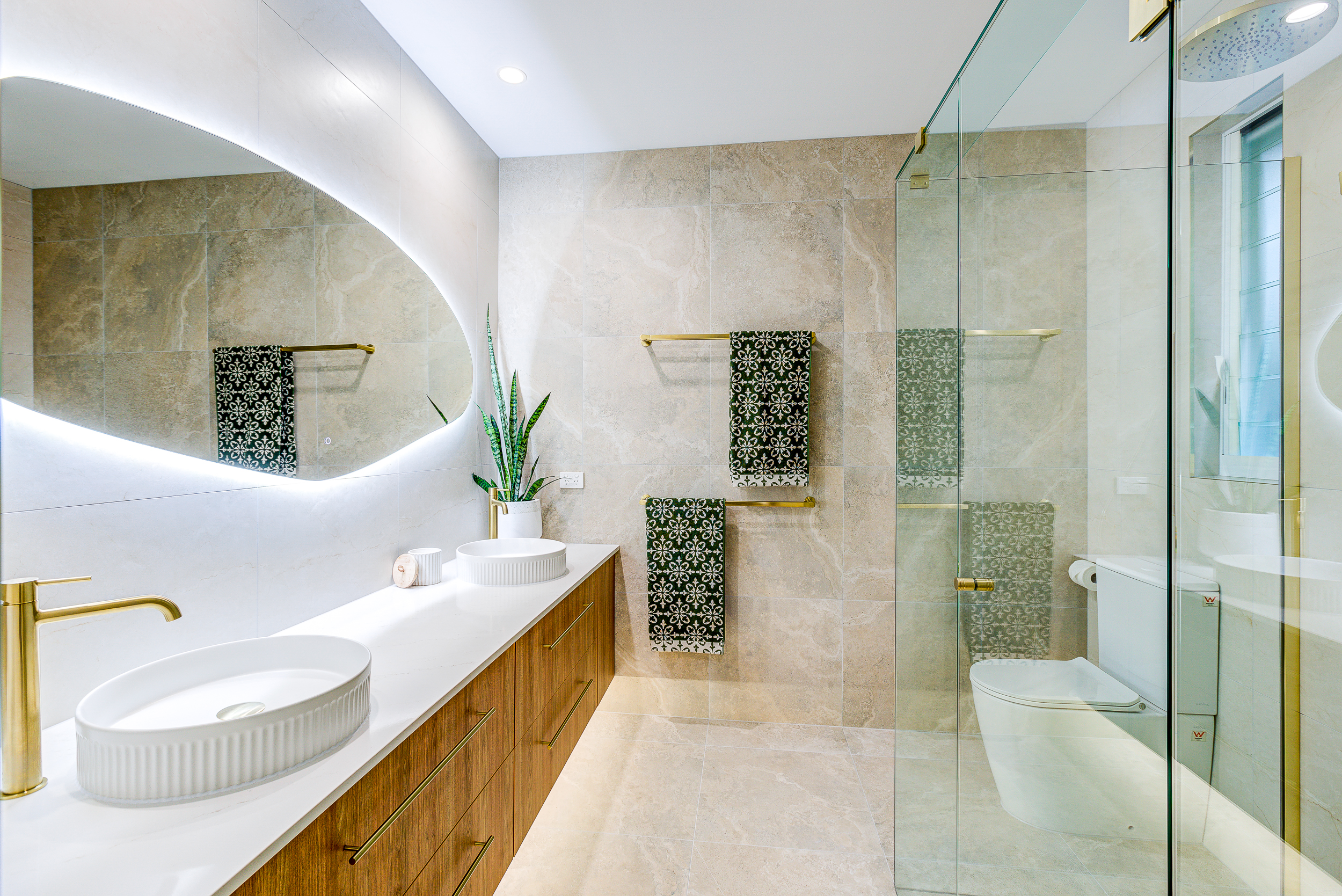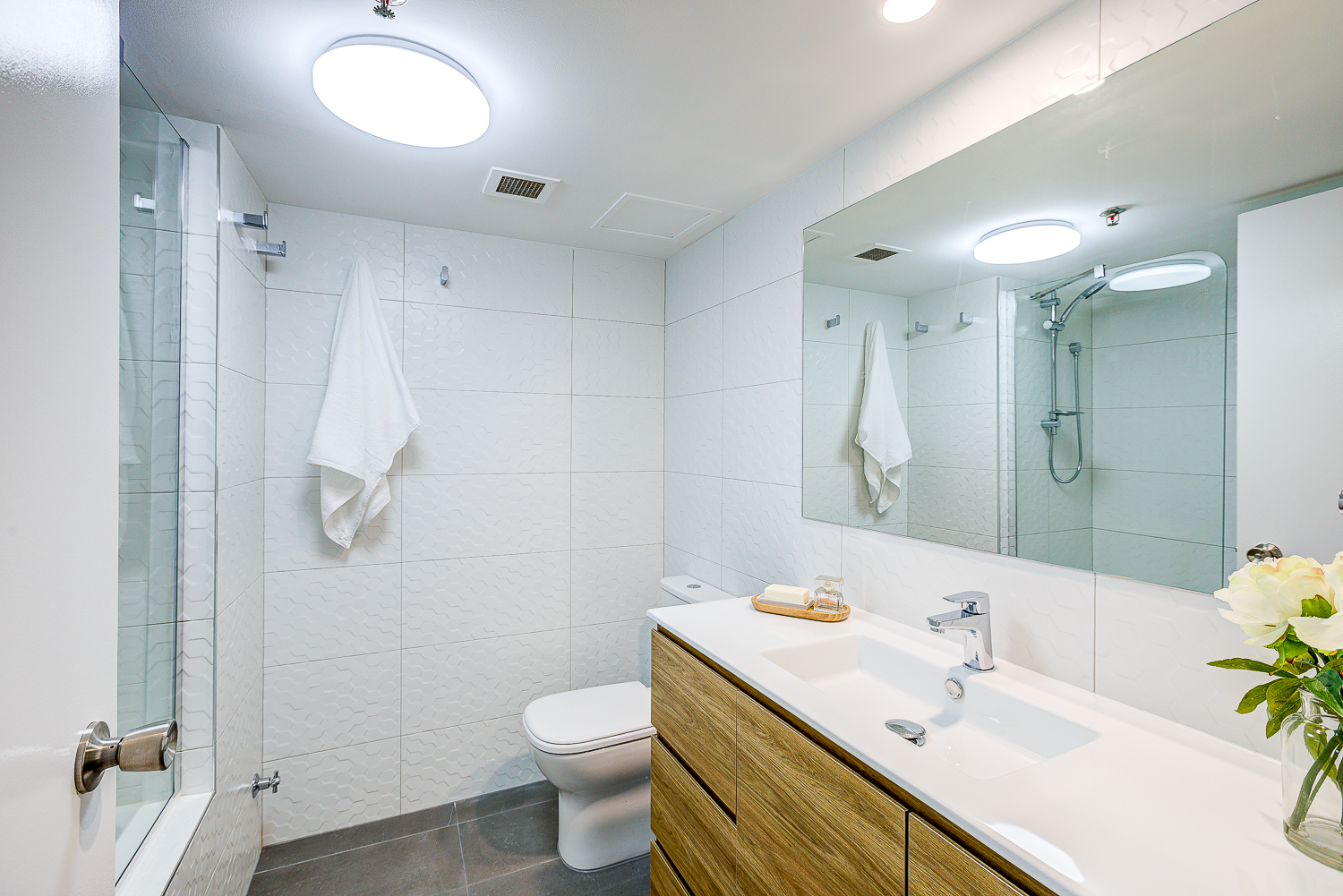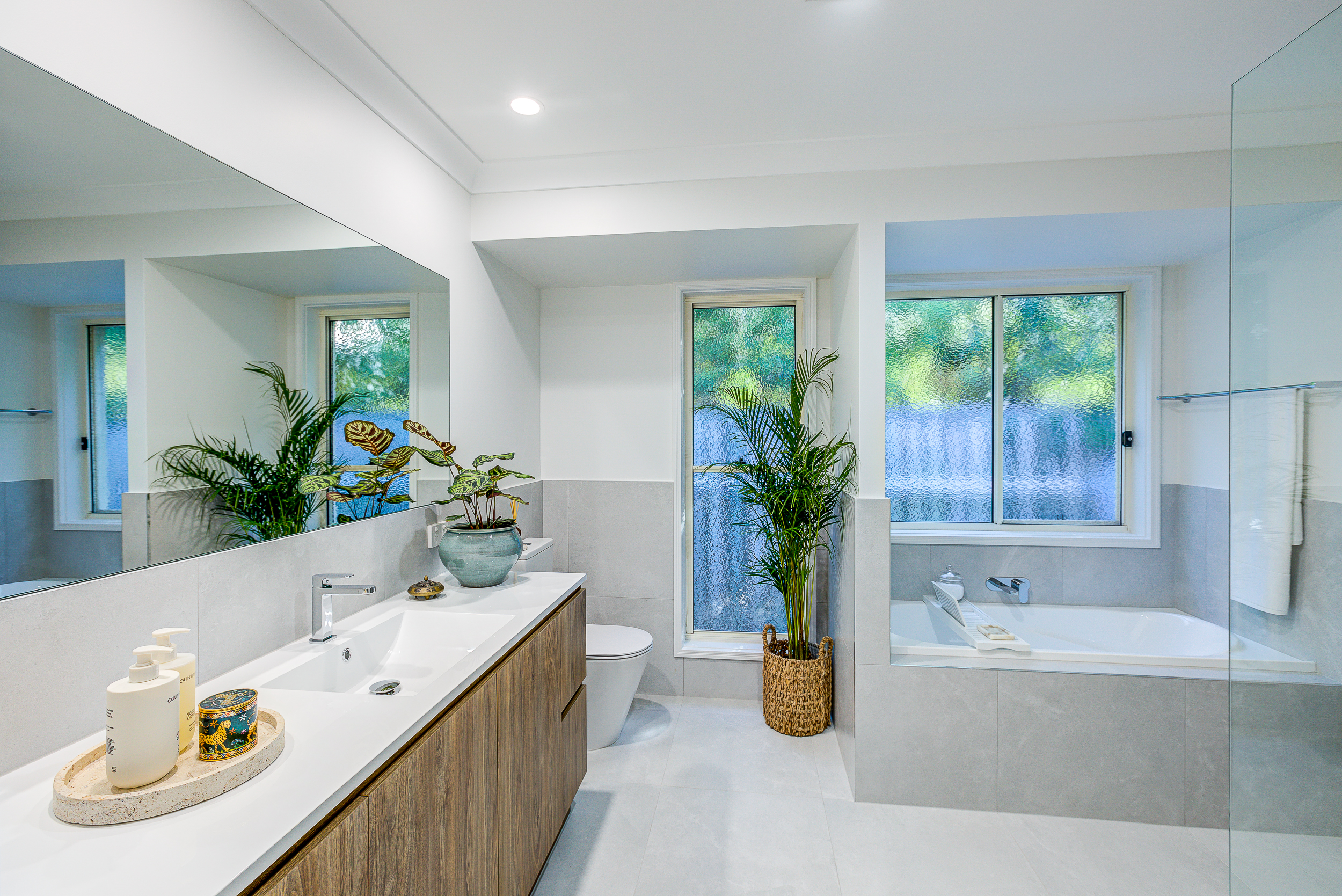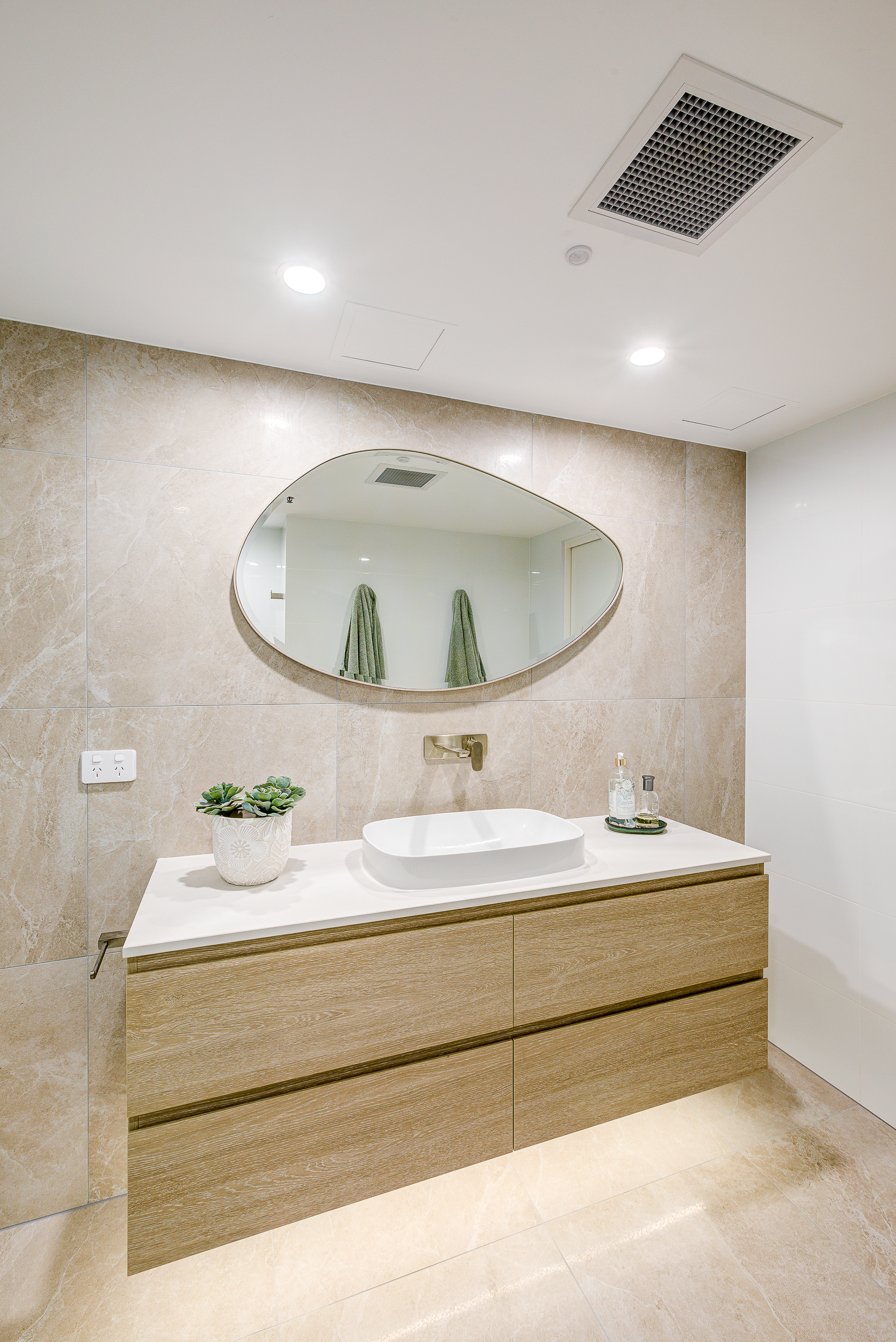
On popular home improvement shows, a full bathroom strip-out happens in 48 hours and a commercial break. In your home, the reality is a bit more methodical—and significantly longer. When clients ask us, “How long does a bathroom renovation take?”, industry standards suggest a realistic average duration falls between four and nine weeks, depending on the complexity of the design and structural needs.
There is nothing quite like brushing your teeth in the kitchen sink to make you realise how much you miss your privacy. You might wonder why such a tiny footprint takes so long to complete. The answer lies in the logistics: a premium residential bathroom upgrade requires at least five different trades—plumbers, electricians, waterproofers, tilers, and decorators—to work in a strict, carefully managed sequence.
Think of your bathroom like a human body. You cannot apply the “skin” (your beautiful new tiles) until the “skeleton” (framing) is straight and the “veins” (plumbing and electrical) are functioning perfectly. Rushing these invisible steps to get to the pretty finishes is the most common cause of future shower leaks.
Planning life without a shower requires a reality check on the bathroom renovation timeline:
- Demolition: TV shows ten minutes of sledgehammers; reality is two days of careful removal, structural assessment, and dust containment.
- Curing: TV ignores it; reality requires 24–48 hours for waterproofing membranes to dry before tiles can touch them.
- Inspections: TV skips them; reality means pausing work for mandatory compliance checks to ensure your safety.
The ‘Pre-Sledgehammer’ Phase: Why Ordering Materials Today Saves Weeks Later
On your favourite renovation program, the presenter usually swings a sledgehammer in the first five minutes. In the real world, swinging that hammer before your materials arrive is a recipe for a bathroom that stays gutted for months. The most successful renovations actually begin with a “Month Zero”—a dedicated planning phase where you secure the critical pieces of your puzzle before a single tile is removed.
Nothing kills momentum faster than a contractor ready to install a custom vanity unit that is still stuck on a shipping container halfway across the ocean. To avoid staring at a subfloor hole during a shipping delay, you need to account for lead times—the gap between finalising your design and the delivery truck arriving. You should finalise orders for these major components well in advance:
- Bespoke Cabinetry: 8–12 weeks (often built to order for personalised storage solutions).
- Plumbing Fixtures: 2–4 weeks (specialty finishes like brushed brass or sustainable water-saving tapware often take longer).
- Custom Glass: 3+ weeks (usually measured after tile installation, but the glazier should be booked early).
Beyond physical products, you also need to organise necessary approvals. Ensuring your new layout meets local building codes isn’t just bureaucratic red tape; it guarantees your space is safe, well-ventilated, and structurally sound. Depending on your local council, getting structural changes approved can take time. Starting demolition without this in hand risks halting your project entirely.
Once your plan is locked in and heavy materials are safely staged, you have effectively insured your timeline against the most common delays. With the logistical heavy lifting complete, our team can finally give the green light for the physical transformation to begin: Week 1.
Week 1: The ‘Skeleton’ Revealed—Demolition and Subfloor Preparation
The moment our experienced crew arrives, the theoretical plan becomes a noisy, exciting reality. While renovation shows make demolition look like purely destructive fun, a professional bathroom renovation service spends significant time strictly on containment before a single tile is pried loose. Before the heavy work begins, we seal the room with zipped plastic barriers and cover ventilation grilles to prevent fine construction dust from coating your living spaces. This preparation is vital, turning a chaotic construction site into a manageable workspace that respects the cleanliness of the rest of your home.
With the room stripped down to the studs, the most critical thirty minutes of the entire project occur when the subfloor is finally revealed. This bottom layer of structural timber or concrete acts as the deck for everything else, and it often hides secrets left by years of slow, invisible water ingress. If we spot dark spots or soft timber, we address them immediately. This “hidden rot” is a common reason timelines shift slightly in the first week, but fixing it is the only way to ensure your expensive new tiles won’t crack from movement six months down the road.
Fixing these structural surprises might add a day or two to your schedule, but a flat, solid base is non-negotiable for a lasting, sustainable renovation. You are essentially resetting the clock on the room’s lifespan, trading a few days of delay for decades of stability. Once the debris is responsibly hauled away and the floor is reinforced, you have a clean, stable environment ready for the next phase. The room is now a blank canvas, prepped for the plumbers and electricians to begin routing the mechanical veins of your new bathroom in Week 2.
Week 2: Routing the ‘Veins’—Plumbing and Electrical First Fix
Now that the walls are open, our licensed tradespeople arrive to install the “veins” of your bathroom. This phase, known as the “first fix,” is where your layout decisions have the biggest impact on the overarching question of how long a bathroom renovation takes. If you choose to keep your toilet and shower in their original locations, this stage might only take a few days. However, deciding to swap the vanity unit and the shower requires opening the floor to relocate waste pipes and cut through joists safely, which naturally adds labour and time to the schedule.
Consider this week your final point of no return for placement changes. Once the electrician runs wiring for your new ambient wall lights and the plumber sets the shower valve depth, altering the design becomes expensive and counterproductive. Modern bathrooms demand significantly more power and precise plumbing than those built decades ago. Your electrician will ensure circuits can handle high-wattage appliances and heated floors safely, adhering to stringent industry standards.
While peering into the open stud bays, you might notice different types of piping being used. This is the modern standard for residential water supply:
- Copper: The traditional choice; it is rigid, heat-resistant, and highly durable, but more labour-intensive to install.
- PEX (Cross-linked Polyethylene): Flexible tubing that reduces water hammer noise and offers a highly efficient, cost-effective installation.
Although the room currently looks like a chaotic mix of drilled holes and hanging wires, every element is placed with precision. Before a single sheet of plasterboard can cover this work, everything is thoroughly checked. This sets the stage for the meticulous waterproofing process coming in Week 3.
Week 3: The ‘Invisible’ Work of Waterproofing
If the constant noise of drills and saws suddenly stops early this week, do not panic. You have entered the crucial waterproofing phase. Your contractor now tackles the most vital element of bathroom longevity: the shower base and wet areas. Before any decorative tile is laid, the shower floor and surrounding walls must become a seamless, waterproof barrier.
Watching this waterproofing process can sometimes test a homeowner’s patience because much of the work involves waiting for chemistry to do its job. Whether your team uses a traditional mortar bed or a highly advanced liquid tanking membrane, these materials require specific curing times to reach full strength. Rushing this drying period to save a single day in the schedule is a common cause of cracked grout and devastating leaks a year down the road. We insist on allowing this “invisible work” to settle undisturbed to guarantee lasting quality.
With the wet zones fully secured and the subfloor preparation steps complete, the room finally begins to look like a defined space again. The installation of moisture-resistant plasterboard and cement fibre board covers the exposed studs, transforming the raw skeleton into a clean, grey canvas. This enclosure marks the end of the rough construction phase, leaving smooth, perfectly flat surfaces ready for the precision work of tiling in Week 4.
Week 4: Setting the ‘Skin’—The Precision Phase of Tiling and Grouting
Finally, the aesthetic payoff arrives. Week 4 is when your bathroom gets its “skin,” transforming raw backer board into the personalised sanctuary you envisioned. While laying tiles looks fast on television, real-world installation is a game of millimetres. Our master tilers will spend the first day strictly on layout—dry-fitting pieces to ensure awkward slivers of tile do not end up in visible corners. Keep in mind that your design choices heavily influence the clock here; laying large-format tiles might take a few days, while intricate patterns like herringbone require extensive cutting and setting time to ensure perfectly flat edges.
Once the tile is set into the adhesive, the room becomes a strictly enforced “no-go” zone. It is crucial to resist the urge to step inside to check the progress. The adhesive underneath needs 24 to 48 hours to form a permanent bond, and premature weight can shift the tiles or break the chemical cure. This waiting period ensures your floor feels solid underfoot and stands the test of time.
Only after the tiles are immovable does the grouting begin. Grout fills the voids to lock out dirt and create a beautifully finished look. A typical timeline for a standard compact bathroom generally follows this rhythm:
- Day 1: Surface prep and meticulous dry layout.
- Day 2-3: Cutting and setting tile with high-quality adhesive.
- Day 4: Curing period (Absolutely no foot traffic allowed).
- Day 5: Grouting and initial sponge clean to remove residue.
With the surfaces cured and cleaned, the heavy construction dust is finally behind you, clearing the way for the plumber to return for the final touches in Week 5.
Week 5: The ‘Finish Line’ Reward—Fixtures, Hardware, and the Snagging List
Seeing your vanity unit, toilet, and elegant tapware emerge from their boxes is often the most satisfying moment of the renovation. This phase is known as the “second fix,” where the mechanical systems hidden behind the walls in Week 2 finally connect to the fixtures you use daily. It transforms a beautifully tiled box into a highly functional bathroom, signalling that the project is nearing its end.
Unlike the slow cure times of tiling, the installation of hardware and fixtures happens remarkably fast—often in just one or two days. Your plumber will return to set the toilet and shower trim, while the electrician mounts your selected lighting and finishes the electrical fittings. Because the “first fix” plumbing was set precisely weeks ago, these finishing pieces should snap into place flawlessly.
Before the project is officially handed over, you and your project manager will conduct a thorough walkthrough to create a “Snagging List.” This is a standard industry practice to catch small cosmetic imperfections that naturally occur during construction, such as a tiny smudge of silicone or a slight adjustment needed on a cabinet hinge. We want to ensure the final product meets the absolute highest standards of functional beauty.
Scrutinise the details that impact daily use. Focus your inspection on these common trouble spots:
- Silicone Lines: Are the seals around the bath and vanity perfectly smooth and watertight?
- Water Pressure: Do both hot and cold taps flow freely and drain properly?
- Cabinetry: Do drawers and doors open fully without obstruction?
- Electrical: Do all heated towel rails and extractor fans operate silently and correctly?
Managing ‘Dead Days’ and Your Final Bathroom Completion Plan
Silence in your house during a refurbishment can feel unsettling, often leading clients to wonder how long a bathroom renovation takes when nobody seems to be on site. However, an empty driveway usually signals that vital “invisible work” is happening, such as waterproofing membranes, curing or adhesive drying beneath your new tiles. Walking on uncured floors to check progress can compromise the watertight seal you just invested in.
Logistics also dictate these pauses. A premier renovation company must choreograph a relay race between specialised tradespeople who cannot work simultaneously. Your tiler cannot grout the floor while the plumber is trying to install the toilet. To keep you fully informed, we provide clear communication and schedule updates, so you always know what phase your project is in. If you are ever curious about the process, checking our bathroom renovation FAQs can offer great peace of mind.
You started this journey focusing on the stunning finishes, but you now see that a successful bathroom upgrade relies heavily on the invisible precision of first fixes and structural integrity. Whether you are upgrading your forever home or renovating to sell, that realistic timeline isn’t just a delay; it is the foundation for longevity.
As you transition from a construction site back to a luxurious, functional space, take these final steps to protect your investment:
- Respect the cure: Allow silicone sealant a full 24 hours to set before taking your first shower.
- Ventilate well: Use your new exhaust fan during every shower to protect your pristine finishes from excess moisture.
- Enjoy the space: Take a moment to appreciate the personalised oasis you have created.
The patience you showed during the dusty middle weeks has finally paid off in a stunning, sustainable bathroom that will beautifully outlast any quick-fix refurbishment.