On the Gold Coast, the coastal look is almost the default setting. Salt air, big windows, strong natural light, and a lifestyle that pulls the outside in. The trick with coastal bathroom design is making it feel relaxed and beachy without tipping into themed-holiday-rental territory. Anchors, rope handles and seashell soap dispensers are not the brief.
This guide walks through how to get coastal bathroom design right in 2026: the colour palettes that work, the tiles and fixtures that pull the look together, and the finishing choices that separate a bathroom that ages beautifully from one that feels dated in five years.
What Coastal Bathroom Design Actually Means in 2026
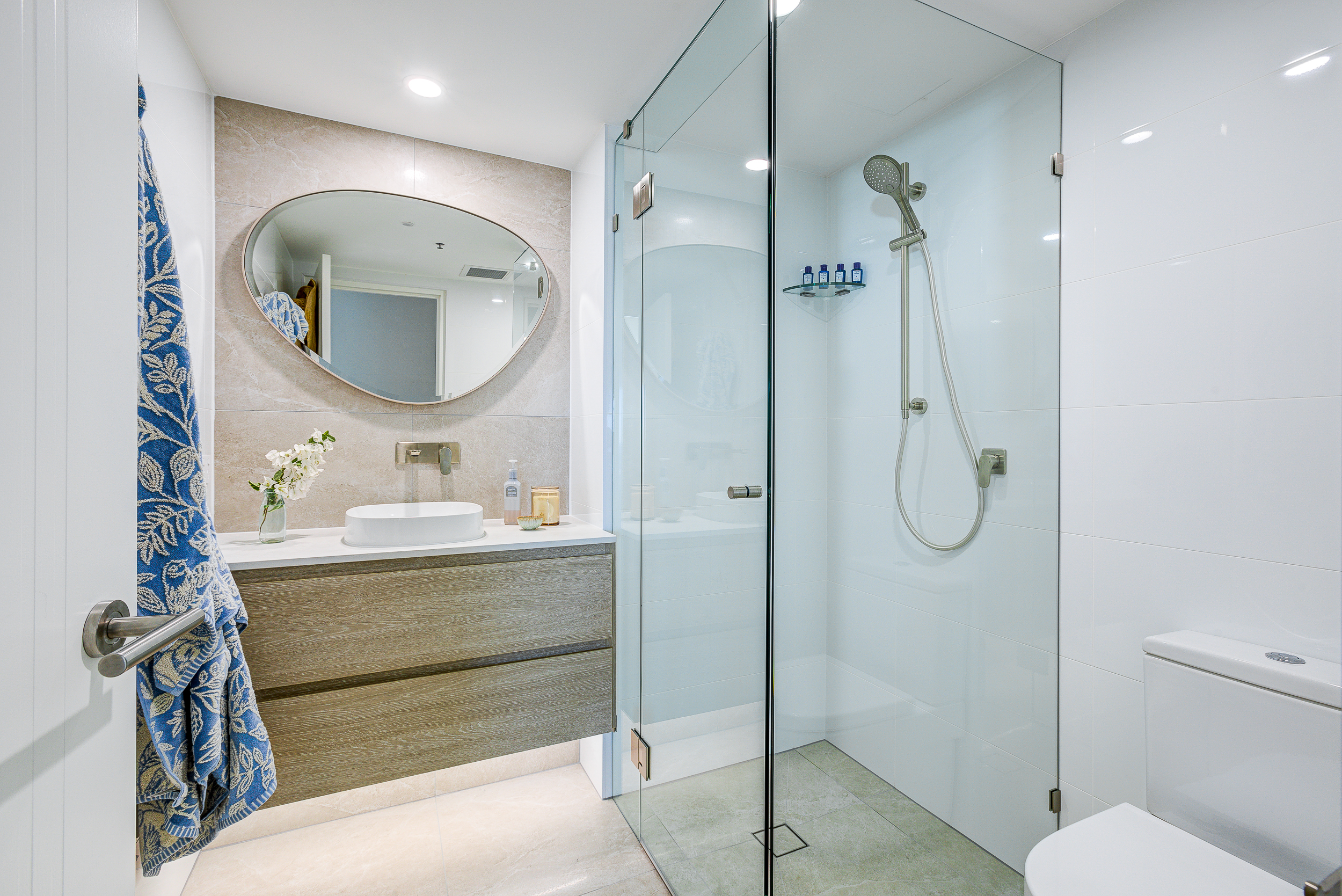
Coastal style has matured. The old version was heavy on navy blue, white-painted timber, rope detailing and obvious nautical references. The 2026 version is softer, warmer and far more sophisticated: calm sun-bleached neutrals, organic textures, stone, brushed brass and curves rather than crisp corners.
The goal is to evoke the feeling of the coast (light, air, calm, easy living) without literally putting the beach on the walls. Done well, a modern coastal bathroom feels like a luxury hotel five minutes from the ocean. Coastal is also one of the most forgiving styles to live with: it photographs well, suits the local light, and resale buyers consistently respond to it.
The Colour Palette: Warm, Sun-Bleached Neutrals
Forget bright, clinical white. The foundation of modern coastal bathroom design is a layered palette of warm neutrals that mimic sand, driftwood and morning sea mist.
Core base colours to build around:
- Warm whites and bone for walls and ceilings, instead of pure cool whites that read grey in shade
- Soft sand and putty for larger tiled areas and feature walls
- Greige (grey-beige) for floor tiles, which hides everyday wear far better than a pale grey
- Soft mushroom or warm taupe for vanities and joinery
Accent colours that work without dating:
- Sage green and eucalyptus, picked up in towels, plants or a single tiled niche
- Soft sky blue and pale aqua, used sparingly (a feature tile in the shower, never a whole wall)
- Dusty terracotta or clay for a warmer, more Mediterranean-coastal take
The biggest mistake we see is treating coastal as a blue-and-white scheme. Real coastal bathrooms in 2026 lean far more on warm earth tones than on ocean colours. If you want the ocean in the room, let the light do it.
Tiles: Where Most Coastal Bathrooms Are Won or Lost
Tiles drive the look more than any other single element.
Floor Tiles
Travertine, limestone and organic stone-look porcelain are the foundation of a coastal floor. Large formats (600x600mm and up) reduce grout lines, make small bathrooms feel bigger, and photograph cleanly. Beaumont Tiles’ modern bathroom guide shows how large-format stone-look tiles transform the proportions of a typical Australian bathroom.
Real travertine is gorgeous but high-maintenance over years of humid Gold Coast summers. Porcelain stone-look tiles have closed the gap dramatically and, unless budget is uncapped, they’re almost always the smarter pick.
Wall Tiles
For walls, the coastal sweet spot is a soft matt-finish tile in warm white, bone or pale putty. A few directions worth knowing:
- Subway and brick-bond tiles in 100x300mm or 75x300mm read fresh and very coastal
- Vertical stack tiles in long, narrow formats feel more modern and add visual height
- Zellige-look tiles with handmade, slightly imperfect surfaces deliver a Mediterranean-coastal vibe
- Full-height feature walls behind the vanity or inside the shower lift the space without dating it
Tile layout matters as much as tile choice. The same tile in a herringbone pattern reads completely differently to a straight stack. Our guide to tile laying patterns walks through which layouts suit which spaces.
Feature Tiles and Niches
A single shower niche or vanity splashback finished in a textured zellige, fluted ceramic or pale-aqua handmade tile is one of the most impactful coastal moves you can make. Use it once, somewhere it earns attention, then leave the rest of the room calm.
Fixtures and Tapware: Brushed Brass Owns Coastal in 2026
Chrome is having a quiet retirement, and nowhere more so than in coastal design. The dominant tapware finishes for 2026 coastal bathrooms are:
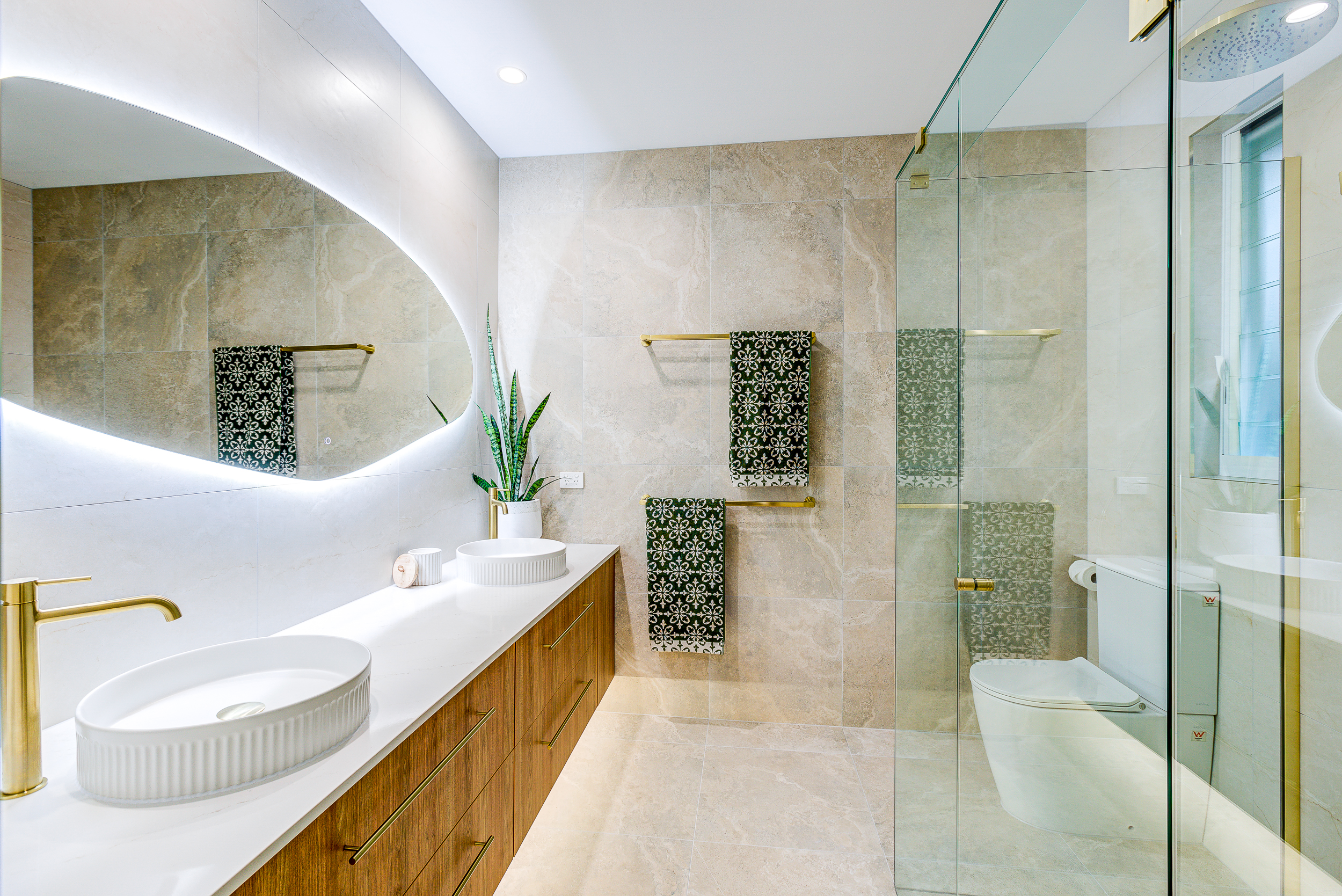
- Brushed brass and aged brass: the warmest, most coastal-aligned finish, and the one most likely to feature in editorial bathrooms this year
- Warm gold and champagne: similar effect with slightly more glamour
- Brushed nickel: making a comeback for buyers who want warmth without the yellow tone
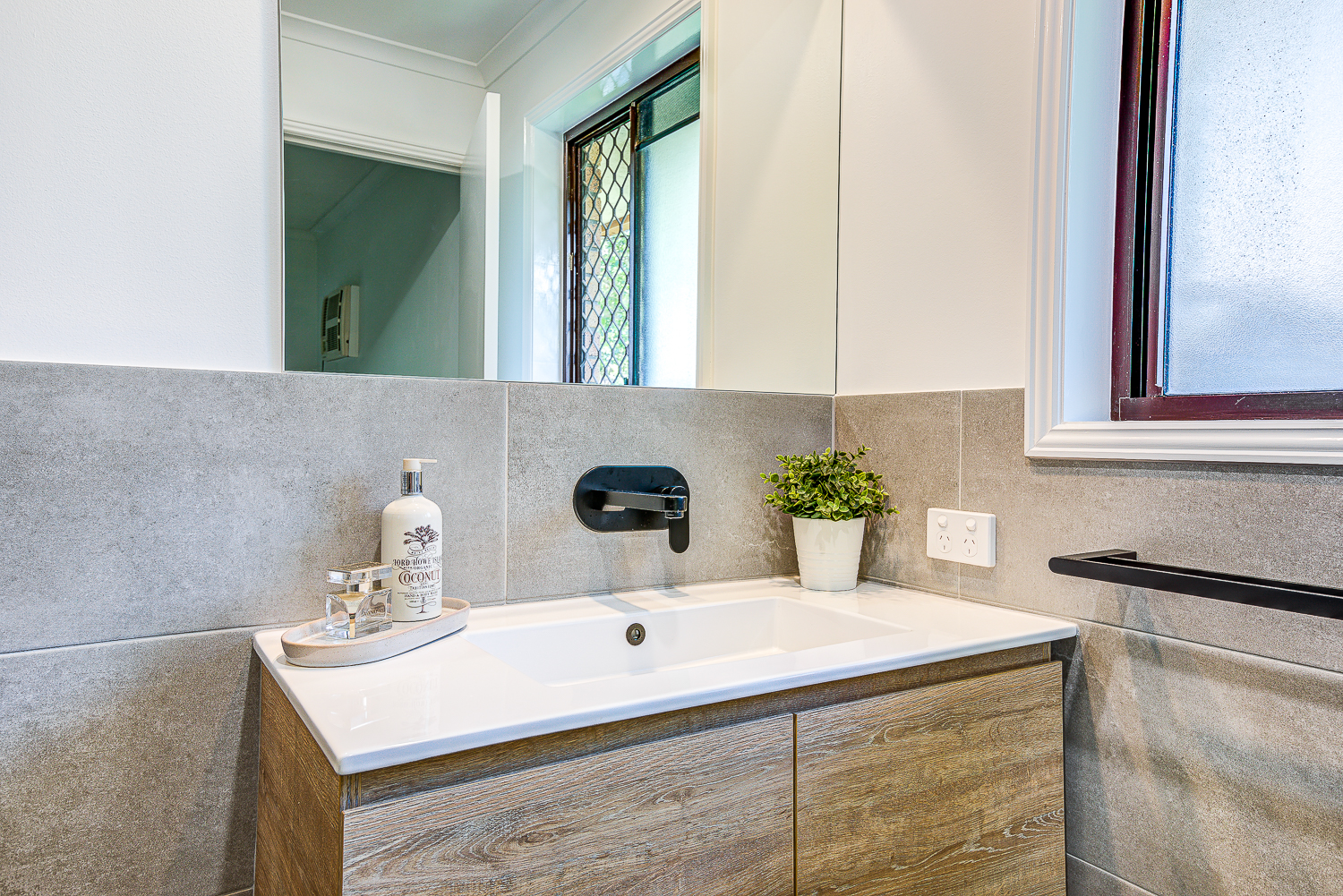
- Matte black: still works in coastal, but use it more sparingly than brass
One critical rule: stick to one metal finish through the entire room, or at most two that share the same warm tonal family. Brushed brass tapware with chrome towel rails and matte black drains is the fastest way to make a brand-new bathroom feel disjointed.
Beyond tapware, the fixtures that nail the coastal look are freestanding baths with soft oval silhouettes (ideally under a window), wall-hung timber-look vanities with stone-look benchtops, arched mirrors with thin brass or timber frames, rainfall shower heads with a matching handheld, and frameless or slim-frame shower screens. Fluted glass on the screen is a nice optional touch.
The Finishing Layer: Texture, Timber and Light
This is where coastal bathrooms really separate themselves.
Texture: Vertical fluted vanity doors, ribbed glass shower screens, a single reeded feature wall, or a textured zellige niche. One textured element per room is usually enough.
Timber accents: A timber-look vanity, a timber-framed mirror, or open timber shelving. Solid timber doesn’t love Queensland humidity, so engineered timber or quality timber-look porcelain is the smarter long-term call.
Lighting: Natural light wherever possible, plus warm-temperature LED downlights (2700K to 3000K, not 4000K cool white). A pair of brushed brass wall sconces beside the mirror is one of the most-photographed details in 2026 coastal bathrooms.
Greenery and textiles: A small olive, eucalyptus or fiddle leaf arrangement, plus linen-look towels in sand, sage or soft terracotta. Avoid pure bright white, which fights the warm palette underneath.
Coastal Design Considerations Specific to the Gold Coast
Designing for the Gold Coast is not the same as designing for a glossy magazine in Melbourne. A few local realities worth designing around:
Humidity is the silent enemy. Salty, humid coastal air corrodes cheaper tapware fast. Spend the extra on PVD-coated brass and stainless internal fixings, not budget chrome alternatives that pit within two summers.
Strong natural light changes how colour reads. A tile that looks crisp white in a showroom can look grey or chalky in a north-facing Gold Coast bathroom at 4pm. Always check tile and paint samples in the actual room, in actual light, before signing off.
Ventilation and waterproofing aren’t optional. Good exhaust, good airflow and quality waterproofing are what make a coastal bathroom last. Cutting corners on waterproofing is the biggest single cause of bathroom failures, which is why every renovation needs to meet Australian Standard AS 3740 under the framework set by the Australian Building Codes Board.
Apartments need different thinking. A lot of Gold Coast coastal design happens in smaller apartment footprints, where wall-hung vanities, large-format tiles and frameless screens do most of the heavy lifting to make the space feel larger.
Frequently Asked Questions
What colours work best for a coastal bathroom?
The 2026 coastal palette is built around warm, sun-bleached neutrals: bone, sand, greige, soft mushroom and warm taupe. Accents like sage green, dusty terracotta or pale aqua work in small doses, but the room should feel calm and warm rather than blue and white.
What tiles suit a coastal bathroom design?
Stone-look porcelain tiles in travertine, limestone or organic textures work best for floors and shower walls. Pair them with soft matt subway, vertical stack or zellige-look wall tiles in warm white or bone. Large formats with fewer grout lines age better and feel more premium than small-format ceramics.
Is brushed brass really the right tapware for a coastal bathroom?
Yes. Brushed brass and aged brass are the dominant warm finishes in 2026 coastal design and they pair beautifully with stone, timber and warm neutrals. Make sure the brass is PVD-coated for Gold Coast humidity, and stick to one metal finish throughout the room.
How much does a coastal bathroom renovation cost on the Gold Coast?
A complete coastal-style renovation on the Gold Coast typically lands between $25,000 and $45,000, depending on size, tile selections and tapware finishes. Larger ensuites, custom joinery and stone benchtops push it higher. Our bathroom renovation packages outline what’s included at each tier.
Will coastal bathroom design still look good in 10 years?
Coastal is one of the most durable bathroom styles because it leans on natural materials and timeless shapes. Stone-look tiles, warm neutrals, timber and simple silhouettes age beautifully. Keep the trend-led pieces in easy-to-swap items like tapware, mirrors and accessories, and the bathroom will look current for years.
Final Thoughts
Done well, coastal bathroom design feels like the room exhales. Warm, calm, sun-bleached, with just enough texture and metal to keep it interesting. The Gold Coast is one of the best places to do this style, because the light and the lifestyle do half the work for you.
If you’re not sure which direction suits your home, our bathroom style quiz takes about two minutes to narrow it down, and our before-and-after gallery shows how these finishes look in finished Gold Coast projects. When you’re ready, get in touch with the Capital Bathrooms team for a quote and we’ll walk you through finishes, packages and timing for your specific bathroom footprint.